
ISO 9001:2026 OFFICIALLY PUBLISHED – KEY CHANGES BUSINESSES NEED TO KNOW
September 16, 2026, marks an important milestone for the global quality management community as ISO 9001:2026 – Quality management systems – Requirements is officially published, replacing ISO 9001:2015, which has been in use for more than a decade.
This is the sixth edition of ISO 9001, the world’s most widely used quality management system standard.
ISO 9001:2026 does not fundamentally change the framework established by ISO 9001:2015. Instead, the new edition focuses on clarifying requirements, improving ease of understanding and applicability, while ensuring that the standard remains relevant to the rapidly changing business and technological environment, as well as the evolving expectations of interested parties.
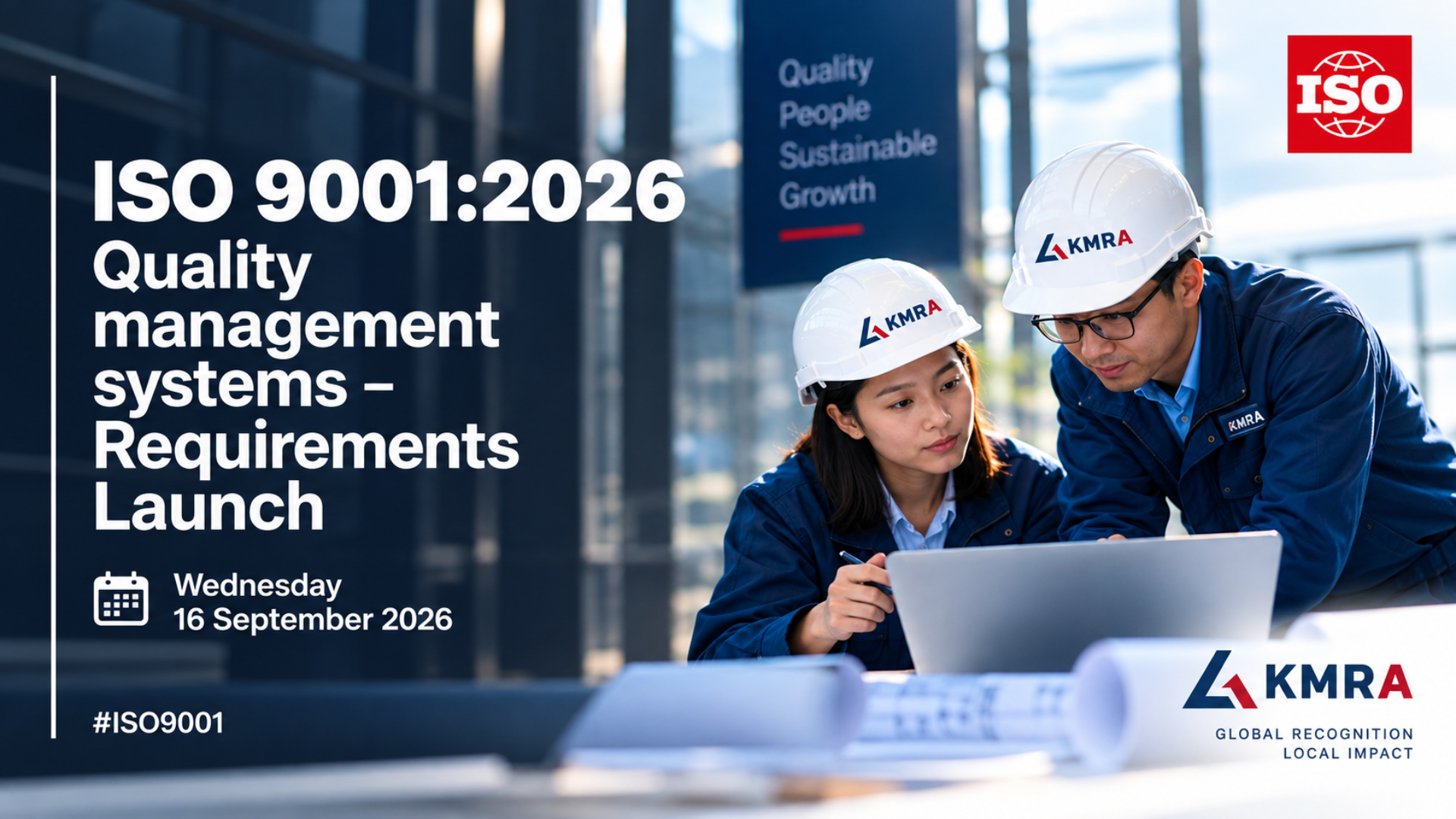
ISO 9001:2026 – OFFICIALLY PUBLISHED
Key Changes in ISO 9001:2026
1. Clearer and More Applicable Requirements
One of the key objectives of ISO 9001:2026 is to improve the clarity of its requirements.
A number of provisions have been revised in terms of wording and terminology to help organizations of different sizes, sectors, and levels of maturity better understand and apply the standard.
This is particularly relevant to small and medium-sized enterprises (SMEs) when implementing a quality management system.
2. Greater Emphasis on Leadership
ISO 9001:2026 continues to strengthen the role of top management in establishing and maintaining an effective quality management system.
Quality management is not solely the responsibility of the ISO or quality department. Instead, it needs to be integrated into the organization’s strategic direction and management practices.
Top management is expected to demonstrate commitment and accountability, while promoting quality as an integral part of how the organization operates and makes decisions.
3. Greater Focus on Quality Culture
One notable aspect of the 2026 edition is its greater emphasis on Quality Culture.
Organizations are not only required to establish processes and maintain documented information, but also to foster an environment in which individuals understand their roles and responsibilities in relation to quality.
Leadership plays an important role in promoting a quality culture and creating the conditions for quality values to be reflected in the organization’s day-to-day activities.
4. Clearer Consideration of Risks and Opportunities
Risk-based thinking remains a fundamental element of ISO 9001.
However, ISO 9001:2026 provides greater clarity regarding the management of risks and opportunities, helping organizations avoid focusing solely on preventing negative impacts while overlooking opportunities that could lead to positive outcomes.
Organizations should proactively:
- Identify and address risks that may affect the intended outcomes of the quality management system;
- At the same time, identify and pursue opportunities that can improve results, operational performance, and value delivered to customers.
5. Stronger Alignment Between the QMS and Organizational Strategy
ISO 9001:2026 further reinforces the principle that the quality management system should support business operations, rather than exist as a standalone system established primarily to meet certification requirements.
The quality policy, quality objectives, and QMS activities should be aligned with the organization’s context and strategic direction.
This enables ISO 9001 to serve as a practical management tool for improving operational performance and creating long-term value.
6. Better Alignment with Other ISO Management System Standards
ISO 9001:2026 has been updated to achieve greater alignment with the ISO Harmonized Structure.
This can make it easier for organizations to integrate ISO 9001 with other management systems, such as:
ISO 14001 – Environmental Management
ISO 45001 – Occupational Health and Safety Management
ISO/IEC 27001 – Information Security Management
ISO 50001 – Energy Management
For organizations operating integrated management systems, this alignment can help reduce duplication and improve overall management efficiency.
7. Climate Change Considerations Integrated into the New Edition
The consideration of climate change was introduced into ISO management system standards through Amendment 1:2024.
In ISO 9001:2026, this consideration is incorporated into the new edition of the standard. Organizations are therefore expected to determine whether climate change is a relevant issue affecting their context and quality management system, while also considering relevant requirements of interested parties, where applicable.
This does not mean that every organization must establish a separate climate change management programme. Rather, organizations need to assess the relevance of climate change to their QMS and determine appropriate actions where necessary.
ISO 9001:2026 Is an Improvement – Not a Complete Rebuild of the QMS
For organizations currently implementing ISO 9001:2015, an important point to note is that ISO 9001:2026 does not represent a complete restructuring of the quality management system.
The fundamental principles of ISO 9001 remain in place, including the process approach, risk-based thinking, customer focus, and continual improvement.
Therefore, organizations that have effectively established and maintained an ISO 9001:2015 system will primarily need to conduct a Gap Analysis, identify new or clarified requirements, and update their system accordingly, rather than rebuild their QMS from the ground up.
What Should Organizations Do Next?
Following the publication of ISO 9001:2026, organizations currently certified to ISO 9001:2015 should proactively:
- Familiarize themselves with the requirements of ISO 9001:2026;
- Conduct a Gap Analysis between their existing system and the new edition;
- Identify processes, documented information, or activities that need to be updated;
- Provide training and raise awareness among top management, managers, and relevant personnel;
- Update the quality management system accordingly;
- Conduct an internal audit to assess conformity before proceeding with the certification transition.
KMRA Supports Organizations in the Transition to ISO 9001:2026
The transition to the 2026 edition of ISO 9001 is not simply a matter of updating the standard. It also provides organizations with an opportunity to review their quality management systems, strengthen their quality culture, and align the QMS more closely with business objectives.
KMRA – KM Registrar & Assurance will continue to provide updates on ISO 9001:2026, including key changes compared with ISO 9001:2015 and the transition roadmap, to help organizations prepare appropriately for the new edition.
ISO 9001:2026 – Clearer requirements, a stronger quality culture, and greater relevance to the modern business environment.
main.comment_read_more