
WHAT IS ISO 9001:2015?
ISO 9001 is the international standard for Quality Management Systems (QMS) published by the International Organization for Standardization (ISO). The standard helps organizations control their processes, meet customer requirements, comply with applicable legal and regulatory requirements, and drive continual improvement.
WHAT IS ISO 9001:2015 CERTIFICATION?
ISO 9001:2015 certification is an independent assessment conducted to verify that an organization's quality management system conforms to the requirements of the ISO 9001 standard. Certification helps organizations improve operational efficiency, strengthen customer confidence, meet tender requirements, and participate in domestic and global supply chains.
ISO 9001:2015 requires organizations to identify their organizational context, understand the needs and expectations of interested parties, establish controlled processes, assess risks and opportunities, set quality objectives, monitor performance, and continually improve the effectiveness of the management system.
ISO 9001 is based on the following core quality management principles:
- Customer focus
- Process approach
- Risk-based thinking
- Continual improvement
WHO NEEDS ISO 9001 CERTIFICATION?
ISO 9001 is applicable to organizations of all sizes and sectors, regardless of their industry or business model.
✓ Manufacturing companies
✓ Logistics companies
✓ Construction companies
✓ Trading companies
✓ Service providers
✓ Information Technology (IT) companies
✓ Hospitals, clinics, and healthcare organizations
✓ Schools and educational institutions
✓ Non-profit organizations
✓ Government agencies and public sector organizations
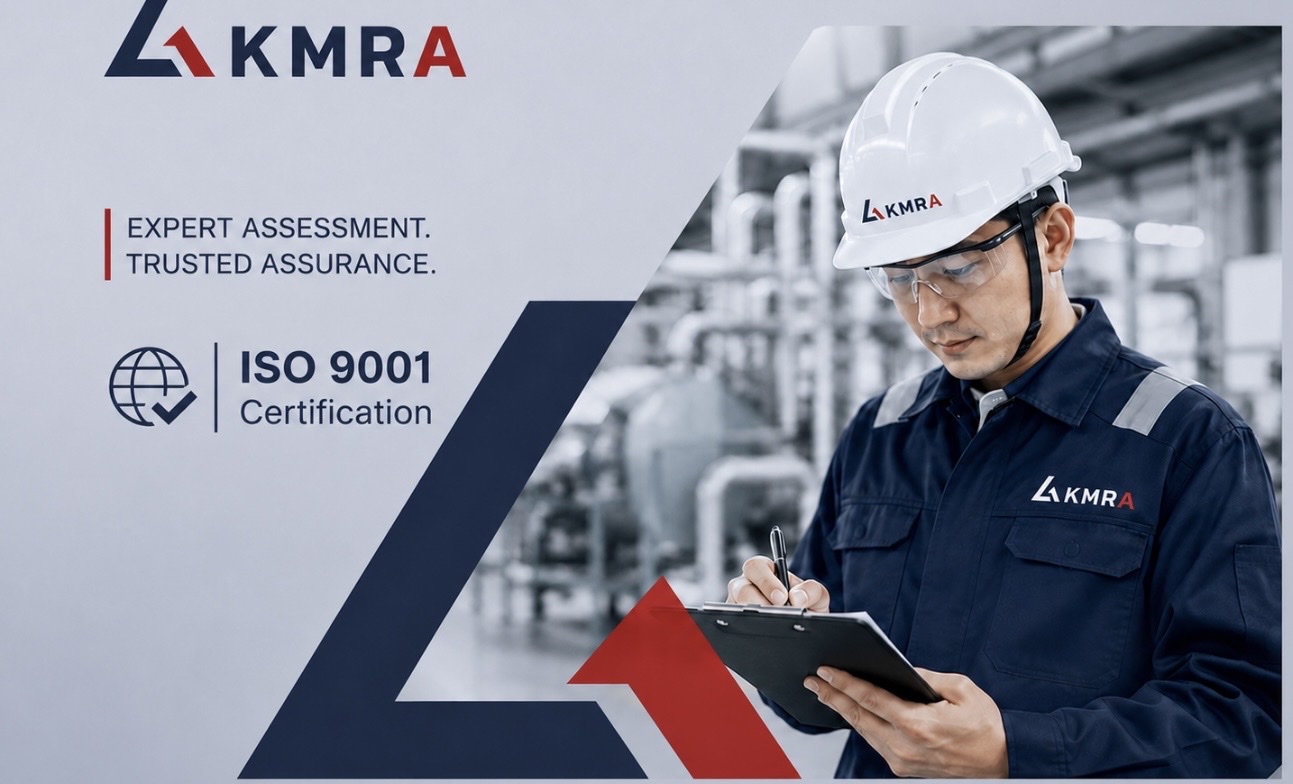
ISO 9001:2015 Quality Management System Certification Audit – KMRA
WHEN SHOULD AN ORGANIZATION OBTAIN ISO 9001 CERTIFICATION?
✓ To standardize operational processes
✓ Before participating in tenders
✓ To become a supplier for FDI companies
✓ To expand into export markets
✓ To enhance management capability
BENEFITS OF ISO 9001 CERTIFICATION
► Increased Customer Satisfaction
A quality management system enables organizations to consistently control product and service delivery processes, improving their ability to meet customer requirements and enhance customer satisfaction.
► Effective Process Control
Clearly defined responsibilities, authorities, and control methods reduce dependence on individual experience while improving operational consistency and stability.
► Reduced Errors and Waste
Process control, root cause analysis, and corrective actions help reduce defects, lower quality-related costs, and optimize organizational resources.
► Meeting Tender and Supply Chain Requirements
Many customers, multinational corporations, and investment projects require suppliers to hold ISO 9001 certification as evidence of management capability.
► Enhanced Corporate Reputation and Credibility
ISO 9001 certification provides objective evidence of an organization's quality management capability, strengthening the confidence of customers, business partners, and other interested parties.
► Continual Improvement
By monitoring performance indicators, conducting internal audits, and performing management reviews, organizations can continually improve the effectiveness of their quality management system.
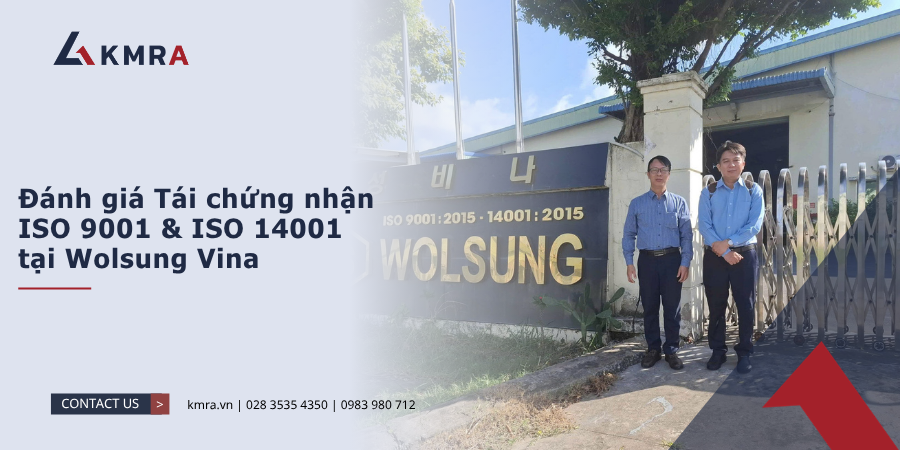
ISO 9001 & ISO 14001 Recertification Audit at Wolsung Vina
HOW DOES ISO 9001:2015 MAKE A DIFFERENCE?
ISO 9001 is more than just a certificate. It enables organizations to establish a structured quality management system, reduce dependence on individuals, improve operational performance, and strengthen long-term competitiveness.
|
Content |
Organizations with ISO 9001 |
Organizations without ISO 9001 |
|
Processes |
Standardized and controlled |
Dependent on individual experience |
|
Quality |
Consistent and reliable |
More prone to errors and inconsistencies |
|
Customer Confidence |
Increased customer trust |
Difficult to demonstrate capability |
|
Tender Participation |
Easier to meet tender requirements |
May face qualification limitations |
|
Supply Chain |
Easier access to supply chains |
More difficult to work with major customers |
|
Continual Improvement |
Structured continual improvement process |
Limited data to support improvement |
ISO 9001 CERTIFICATION PROCESS AT KMRA
The ISO 9001 certification process at KMRA consists of 8 key steps:
Certification
Registration
Application
Review
Audit Program
Planning
Stage 1
Audit
Stage 2
Audit
Technical Review
& Decision
Certificate
Issuance
Surveillance &
Recertification
Step 1: Certification Application & Enquiry
The organization provides information regarding:
- Scope of activities
- Number of employees
- Locations where the management system is implemented
This information is used to develop an appropriate certification audit program.
Step 2: Application Review
KMRA reviews information related to:
- Certification scope
- Quality Management System information
- Conditions for conducting the audit
The objective is to define the certification scope and establish the audit plan.
Step 3: Audit Program & Planning
The audit program is developed based on the organization's scope of activities, complexity, number of sites, and applicable standard requirements to ensure a comprehensive and effective audit process.
Step 4: Stage 1 Audit
The Stage 1 Audit evaluates the readiness of the Quality Management System by:
- Reviewing management system documentation
- Assessing system readiness
- Identifying issues that should be addressed before the Stage 2 Audit
Step 5: Stage 2 Audit
The Stage 2 Audit evaluates the implementation and effectiveness of the Quality Management System to determine conformity with ISO 9001:2015 requirements.
The audit includes:
- Operational processes
- Records and documented information
- Quality control activities
- Effectiveness of the management system
Step 6: Technical Review & Certification Decision
Audit results are independently reviewed to:
- Ensure impartiality
- Verify compliance with certification requirements
- Make the certification decision
Step 7: Certification
ISO 9001 certification is granted once the organization demonstrates conformity with all applicable requirements and completes any required corrective actions.
Step 8: Annual Surveillance & Recertification
During the three-year certification cycle, KMRA conducts periodic surveillance audits to confirm that the organization continues to:
- Maintain its Quality Management System
- Comply with ISO 9001 requirements
- Continually improve system effectiveness
At the end of the certification cycle, a recertification audit is conducted to renew the validity of the certificate.
HOW LONG DOES IT TAKE TO OBTAIN ISO 9001 CERTIFICATION?
The time required to achieve ISO 9001 certification typically ranges from 1 to 6 months, depending on the organization's size, the maturity of its Quality Management System, and the certification scope. For most small and medium-sized enterprises (SMEs), implementation and certification generally take 2–3 months.
|
Organization Size |
Typical Timeframe |
|
Fewer than 50 employees |
1–3 months |
|
50–200 employees |
2–4 months |
The actual timeframe depends on the maturity of the Quality Management System and the organization's readiness to standardize its internal processes before the certification audit.
Factors affecting the certification timeline include:
- Maturity of the documented management system
- Previous ISO implementation experience
- Number of employees and operational sites
- Internal audit results and corrective actions
- Coordination between the organization and the certification body
Organizations with well-established operating procedures and quality performance data typically achieve certification more quickly.
Organizations that rely primarily on undocumented practices or individual experience generally require additional time to develop documentation, standardize processes, and train personnel.
In addition, broader certification scopes involving multiple sites or complex processes require longer on-site audit durations.
ISO 9001 CERTIFICATION COST
The cost of ISO 9001 certification is not fixed and depends on several factors, including:
- Number of employees
- Number of operational sites
- Business sectorz
- Certification scope
- Complexity of operational processes
- Audit duration required by accreditation rules
Since every organization has different operational characteristics and certification requirements, quotations are prepared based on the organization's actual information.
CONTACT KMRA FOR A QUOTATION WITHIN 24 HOURS
KMRA will recommend an appropriate certification scope, audit duration, and certification cost based on your organization's size and business needs.
GET A QUOTATION
WHY CHOOSE KMRA?
✓ Certification Conducted in Accordance with International Requirements
Certification programs are carried out in accordance with internationally recognized requirements to ensure impartiality, transparency, and confidence in certification results.
✓ More Than 10 Years of Certification Experience in Vietnam
KMRA is built upon the strong foundation of KMR Vietnam, with more than 10 years of experience in management system certification.
✓ Experienced Industry Auditors
Our auditors possess extensive practical experience across manufacturing, services, logistics, food, automotive, electronics, and many other industries.
✓ Nationwide Services
Certification and auditing services are available throughout Vietnam.
✓ Value Beyond Certification
KMRA not only assesses conformity but also supports organizations in their continual improvement and sustainable development journey.
KEY FIGURES
- 10+ years of certification and auditing experience in Vietnam
- 1,000+ organizations certified through management system certification and conformity assessment programs
- 100+ auditors and trainers
- 100+ certification, auditing, and training programs across various industries
CERTIFIED CLIENTS
Trusted by more than 1,000 organizations
Representative industries include:
- Automotive Components
- Logistics
- Food
- Electronics
- Construction
- Information Technology (IT)
- Engineering Services
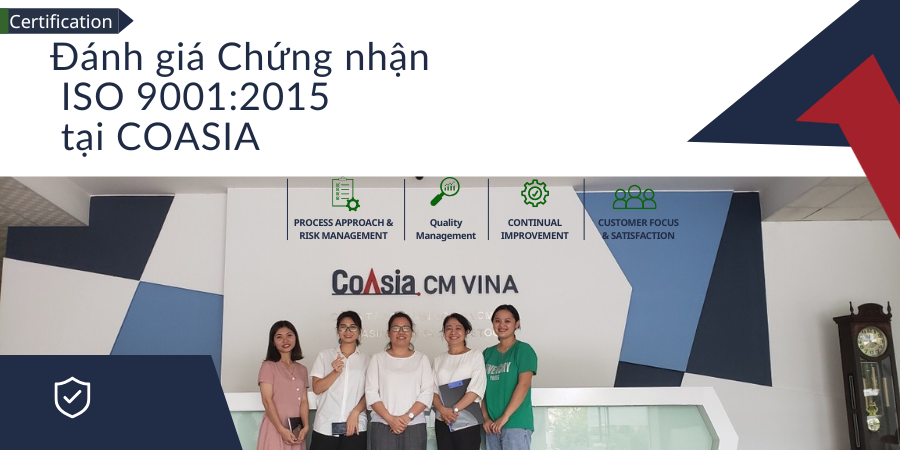
ISO 9001:2015 Certification Audit at COASIA CM VINA
FREQUENTLY ASKED QUESTIONS (FAQ)
1. How long is an ISO 9001 certificate valid?
An ISO 9001 certificate is valid for three (3) years from the date of issue, subject to successful annual surveillance audits.
2. Is ISO 9001 certification internationally recognized?
Yes. ISO 9001 is an internationally recognized standard. The level of international acceptance depends on the accreditation supporting the certificate and the requirements of customers or target markets.
3. Can ISO 9001 certification be used for tender applications?
Yes. Many tenders, investment projects, and corporate customers require or give preference to suppliers certified to ISO 9001.
4. Is it mandatory to hire an ISO consultant?
No. Organizations may develop and implement their Quality Management System independently if they have sufficient internal resources and expertise.
5. Can certification still be granted if nonconformities are identified?
Yes. Certification may be granted after the organization implements effective corrective actions and demonstrates that the identified nonconformities have been adequately resolved.
6. What is a surveillance audit?
A surveillance audit is a periodic assessment conducted during the certification cycle to verify that the Quality Management System continues to comply with ISO 9001 requirements.
7. Is recertification required after three years?
Yes. A recertification audit must be completed before the certificate expires to maintain certification.
8. Can an ISO 9001 certificate be suspended or withdrawn?
Yes. Certification may be suspended or withdrawn if the organization fails to maintain conformity with ISO 9001 requirements or does not meet surveillance obligations.
9. Who conducts ISO 9001 certification audits?
Certification audits are conducted by qualified auditors appointed by the certification body in accordance with established certification procedures.
10. Can ISO 9001 be integrated with ISO 14001 and ISO 45001?
Yes. These standards share a common structure, allowing organizations to implement an Integrated Management System (IMS) to optimize resources and reduce operating costs.
11. What is the difference between ISO 9001 and IATF 16949?
IATF 16949 is an automotive industry-specific standard built upon ISO 9001, incorporating additional requirements for automotive manufacturers and suppliers.
12. Does ISO 9001 certification help organizations meet FDI customer requirements?
Yes. Many foreign-invested enterprises (FDIs) and multinational corporations require or prefer suppliers with certified ISO 9001 Quality Management Systems.
13. Is ISO 9001 suitable for newly established organizations?
Yes. ISO 9001 is suitable for both newly established and well-established organizations. Implementing a Quality Management System early provides a strong foundation for sustainable growth.
14. What is the greatest value of ISO 9001?
The greatest value of ISO 9001 lies not in the certificate itself, but in establishing a systematic Quality Management System that controls processes, reduces errors, improves customer satisfaction, and drives continual improvement.
KMRA – THE ISO 9001:2015 CERTIFICATION PARTNER FOR VIETNAMESE BUSINESSES
Built on more than a decade of experience in management system certification and auditing in Vietnam, KMRA supports organizations across manufacturing, logistics, food, electronics, construction, and service industries in building customer confidence, meeting market requirements, and strengthening long-term competitiveness.