WHAT IS ESG?
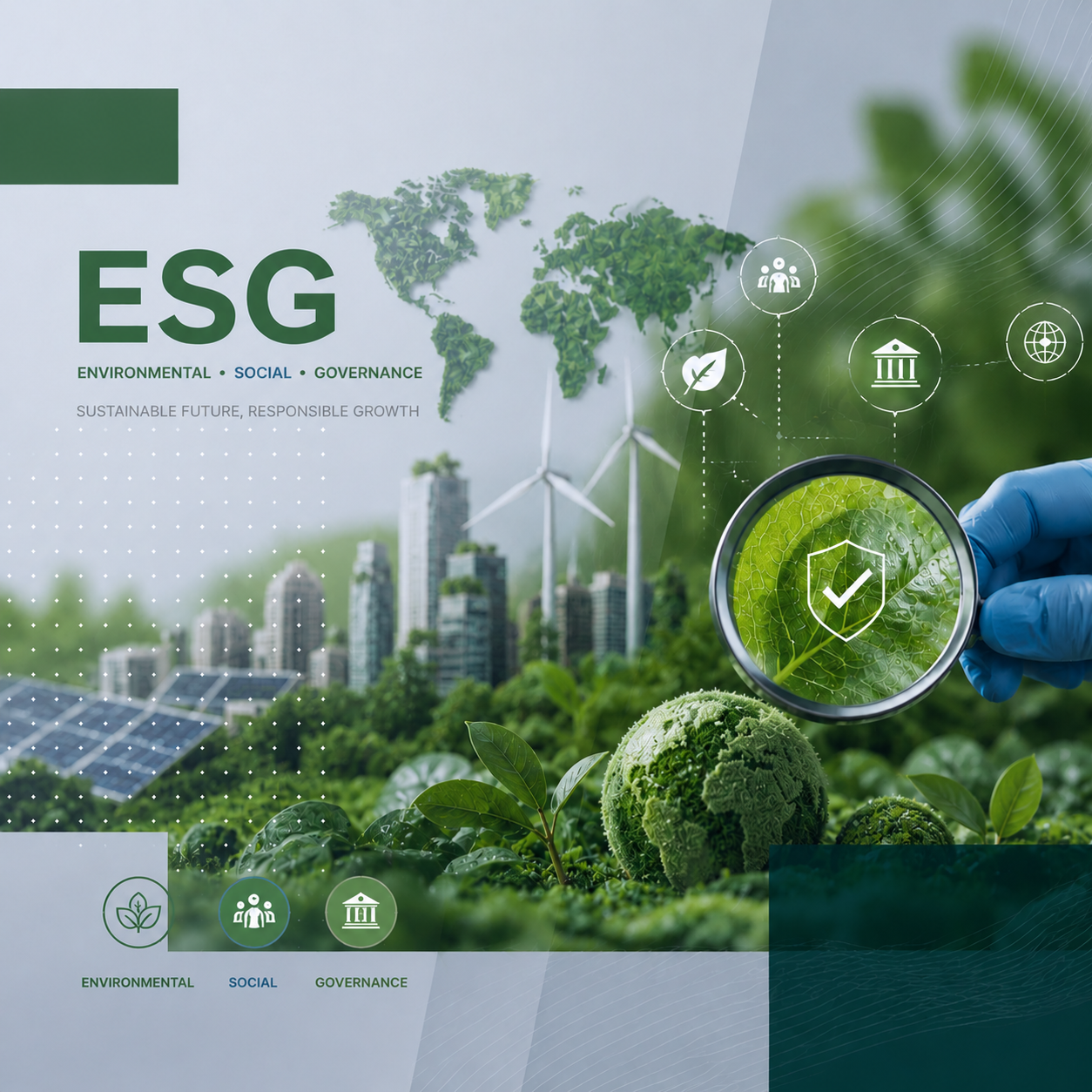
ESG is a set of criteria used to evaluate a company’s sustainable development performance based on three key aspects:
E – Environmental: Evaluates the company’s impact on the environment, including greenhouse gas emissions, energy consumption, waste management, and natural resource usage.
S – Social: Evaluates the company’s social responsibility toward employees, customers, communities, and related stakeholders.
G – Governance: Evaluates transparency, business ethics, risk management, and corporate governance effectiveness.
Today, ESG is not only a trend but has become an important requirement for businesses seeking sustainable growth and international integration.
WHAT IS ESG VERIFICATION?
ESG verification is the process of evaluating a company’s level of compliance with ESG criteria through the review of policies, data, management processes, and implementation results.
The ESG assessment and verification results help businesses demonstrate their commitment to sustainable development to investors, customers, and stakeholders.
WHICH BUSINESSES SHOULD IMPLEMENT ESG?
ESG is suitable for:
✓ Manufacturing companies
✓ Export enterprises
✓ Listed companies
✓ Foreign-invested enterprises (FDI)
✓ Corporations and large enterprises
✓ Businesses participating in global supply chains
✓ Banks and financial institutions
✓ Real estate and construction companies
✓ Logistics and transportation companies
✓ Energy companies
✓ Technology companies
✓ Organizations aiming for sustainable development
BENEFITS OF IMPLEMENTING ESG
Key benefits of ESG:
- Enhance business reputation and corporate image.
- Attract investors and international partners.
- Meet customer requirements and global supply chain expectations.
- Improve access to green financing.
- Manage risks more effectively.
- Optimize energy and resource costs.
- Increase employee engagement.
- Enhance long-term competitiveness.
- Support compliance with sustainable development regulations.
- Create a foundation for sustainable growth.
ESG ASSESSMENT PROCESS AT KMR VN
ESG Implementation Steps
Step 1: Receive requirements and conduct current status assessment
Step 2: Define the scope of ESG assessment
Step 3: Collect data and relevant documents
Step 4: Assess Environmental (E) criteria
Step 5: Assess Social (S) criteria
Step 6: Assess Governance (G) criteria
Step 7: Consolidate results and prepare ESG report
Step 8: Issue ESG verification or propose an improvement roadmap
Step 9: Conduct periodic monitoring and evaluation
HOW LONG DOES ESG IMPLEMENTATION TAKE?
|
Company Size |
Reference Timeline |
|
Fewer than 50 employees |
1 - 2 months |
|
50 - 200 employees |
2 - 4 months |
|
Over 200 employees |
3 - 6 months |
The actual implementation time depends on the company’s size, data readiness, and the scope of ESG assessment.
WHAT FACTORS AFFECT THE COST OF ESG ASSESSMENT?
The cost of ESG assessment depends on:
• Company size
• Number of operating locations
• Business sector
• Complexity of operations
• Scope of ESG assessment
• Amount of data required for evaluation
• Reporting and verification requirement
WHY CHOOSE KMRA?
✓ Experienced ESG experts: A team of experts with extensive knowledge of international ESG standards and practices.
✓ Transparent assessment process: Objective and reliable assessment methodology.
✓ Comprehensive business support: Accompanying businesses from current status assessment to ESG improvement.
✓ Enhance credibility with partners and investors: Strengthening the image of a sustainable business.
✓ Nationwide support: Flexible implementation across all provinces and cities
SAMPLE ESG REPORT
An ESG report typically includes:
• Company information
• Assessment scope
• ESG assessment results
• Strengths and improvement opportunities
• Environmental indicators
• Social indicators
• Governance indicators
• Improvement recommendations
• Assessment conclusion
FREQUENTLY ASKED QUESTIONS (FAQ)
1. What is ESG?
ESG stands for Environmental, Social, and Governance. It is a set of criteria used to evaluate a company’s sustainable development performance and responsibility toward the environment, society, and corporate governance.
2. Is ESG mandatory for businesses?
Currently, ESG is not mandatory for all businesses. However, many international customers, investors, multinational corporations, and export markets are increasingly requiring businesses to meet ESG criteria within global supply chains.
3. What is the difference between ESG and CSR?
CSR (Corporate Social Responsibility) mainly focuses on community activities and social responsibilities. ESG, meanwhile, is a more comprehensive evaluation system that includes measurable indicators related to environmental, social, and governance performance, helping businesses demonstrate sustainable development effectiveness to stakeholders.
4. Does ESG help attract investors?
Yes. Investors are increasingly prioritizing businesses with clear ESG strategies because ESG demonstrates effective risk management, transparency, and long-term sustainable growth potential.
5. Should small businesses implement ESG?
Yes. ESG is not only for large corporations. Small and medium-sized enterprises can implement ESG through a suitable roadmap to improve credibility, meet customer requirements, and gain competitive advantages in the market.
6. Is ESG related to carbon emissions?
Yes. Greenhouse gas emission management and carbon footprint reduction are important components of the Environmental pillar in ESG. These issues are also receiving significant attention from international partners and export markets.
7. How long does ESG implementation take?
The implementation timeline depends on company size, management system readiness, and objectives. Generally, businesses may need 3 to 12 months to establish an initial ESG foundation and implement improvement programs.
8. How much does ESG assessment cost?
The cost of ESG assessment depends on company size, number of operating locations, assessment scope, and applicable standards. To receive an accurate quotation, businesses need to provide information about their business activities and specific assessment requirements.
9. Does ESG support product exports?
Yes. ESG is becoming an important requirement in many markets such as Europe, the United States, Japan, and South Korea. Implementing ESG helps businesses improve competitiveness, meet international customer requirements, and participate more effectively in global supply chains.
10. Where should businesses start with ESG?
Businesses should begin by assessing their current operations, identifying key environmental, social, and governance issues, and then developing an appropriate implementation roadmap. Combining ESG with management systems such as ISO 9001, ISO 14001, ISO 45001, or ISO 50001 can also help improve efficiency and optimize resources during implementation.