
ESG REPORTING UNDER ISSB (IFRS S1 & IFRS S2): WHAT DO BUSINESSES NEED TO PREPARE TO MEET GLOBAL TRENDS?
A sustainability report in accordance with ISSB (IFRS S1 & IFRS S2) is becoming an increasingly important requirement, enabling businesses to disclose sustainability-related information in a transparent and standardized manner.
As ESG requirements are increasingly becoming a standard consideration in international investment and business activities, a Sustainability Report is no longer merely a voluntary document. It is becoming an important tool for businesses to enhance transparency, strengthen governance capabilities, and demonstrate their commitment to sustainable development.
In particular, the introduction of the International Sustainability Standards Board (ISSB) Standards, including IFRS S1 and IFRS S2, represents a significant shift in how businesses prepare and disclose sustainability-related information in accordance with international practices.
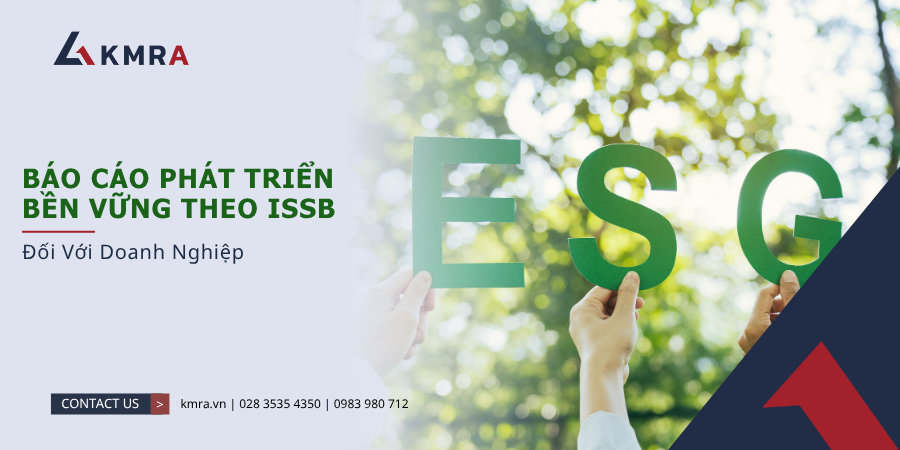
How is a Sustainability Report under ISSB implemented for businesses?
I. What is a Sustainability Report under ISSB?
A Sustainability Report is a document that discloses information related to a business's impacts on the environment, society, and governance (ESG), while also reflecting how the business manages sustainability-related risks and opportunities that may affect its business operations and prospects.
To standardize the disclosure of such information, the International Sustainability Standards Board (ISSB) has issued its first two Standards:
+ IFRS S1 – General Requirements for Disclosure of Sustainability-related Financial Information
+ IFRS S2 – Climate-related Disclosures
These two Standards provide a foundation for businesses to prepare sustainability-related disclosures based on transparent, comparable, and decision-useful information that meets the information needs of investors globally.
II. Why should businesses pay attention to a Sustainability Report?
An increasing number of customers, banks, investment funds, and multinational corporations are requiring businesses to disclose ESG information in accordance with international standards.
A well-developed Sustainability Report can provide businesses with a number of important benefits, including:
+ Enhancing corporate transparency and credibility.
+ Strengthening investor and stakeholder confidence.
+ Supporting the identification and management of ESG-related risks.
+ Improving access to capital and international markets.
+ Strengthening competitiveness within global supply chains.
For export-oriented businesses, preparing a Sustainability Report aligned with ISSB requirements can provide a significant competitive advantage when responding to sustainability-related requirements from international customers and business partners.
III. What do IFRS S1 & IFRS S2 require businesses to disclose?
To develop a Sustainability Report in accordance with ISSB Standards, businesses should focus on four key areas:
1. Governance
Businesses should disclose the roles and responsibilities of the Board of Directors and executive management in overseeing sustainability-related risks and opportunities, including ESG matters.
2. Strategy
Businesses should identify sustainability-related risks and opportunities that could reasonably be expected to affect their business prospects over the short, medium, and long term.
Under IFRS S2, particular attention should be given to climate-related risks and opportunities, including their potential impact on the business strategy and financial performance.
3. Risk Management
Businesses should describe the processes used to identify, assess, prioritize, monitor, and manage sustainability-related risks and opportunities, as well as how these processes are integrated into the organization's overall risk management framework.
4. Metrics and Targets
Businesses should establish appropriate KPIs, metrics, and targets to monitor progress toward their sustainability objectives and ensure that reliable, consistent, and verifiable data is available for inclusion in the Sustainability Report.
What do businesses need to prepare?
Developing a Sustainability Report is not simply a matter of collecting and consolidating data. It requires businesses to establish a comprehensive ESG management system and appropriate internal governance mechanisms.
Key areas that should be prioritized include:
- Establishing processes for collecting, monitoring, and managing ESG data.
- Developing a KPI system to support sustainability-related disclosures.
- Strengthening coordination and information sharing among relevant departments.
- Providing training for personnel responsible for ESG management and sustainability reporting.
- Integrating ESG considerations into the organization's long-term business strategy.
In addition, implementing management system standards such as ISO 9001, ISO 14001, ISO 45001, and ISO/IEC 27001 can help businesses standardize processes, improve data quality, strengthen organizational controls, and establish a solid foundation for preparing a Sustainability Report in alignment with ISSB Standards.
IV. Challenges in implementation
During the process of developing a Sustainability Report, many businesses continue to face challenges such as:
+ Insufficient or inaccurate ESG data.
+ Lack of a consistent KPI framework.
+ Limited experience in managing ESG-related risks and opportunities.
+ Difficulties in assessing the financial effects of sustainability-related risks and opportunities.
+ Lack of appropriate processes for data verification, validation, and internal control.
Therefore, developing an appropriate implementation roadmap, together with support from experienced professional consultants, can help businesses save time, optimize resources, strengthen internal capabilities, and effectively meet ISSB disclosure requirements.
V. Conclusion
In the global transition toward sustainable development, a Sustainability Report is no longer simply a disclosure document. It is also an important management tool that enables businesses to strengthen governance, manage risks, improve transparency, and enhance their credibility in the market.
Proactively developing a Sustainability Report in accordance with the ISSB Standards (IFRS S1 & IFRS S2) can help businesses meet the expectations of investors, customers, and international business partners while establishing a strong foundation for their long-term sustainability strategy.
By integrating ESG considerations with internationally recognized management systems such as ISO 9001, ISO 14001, ISO 45001, and ISO/IEC 27001, businesses can strengthen their management framework, improve the reliability of sustainability-related data, and enhance their readiness for the evolving global sustainability reporting landscape.
main.comment_read_more