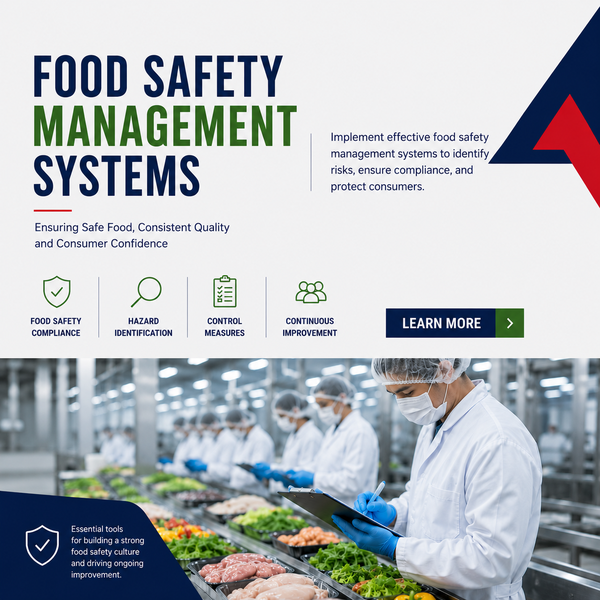
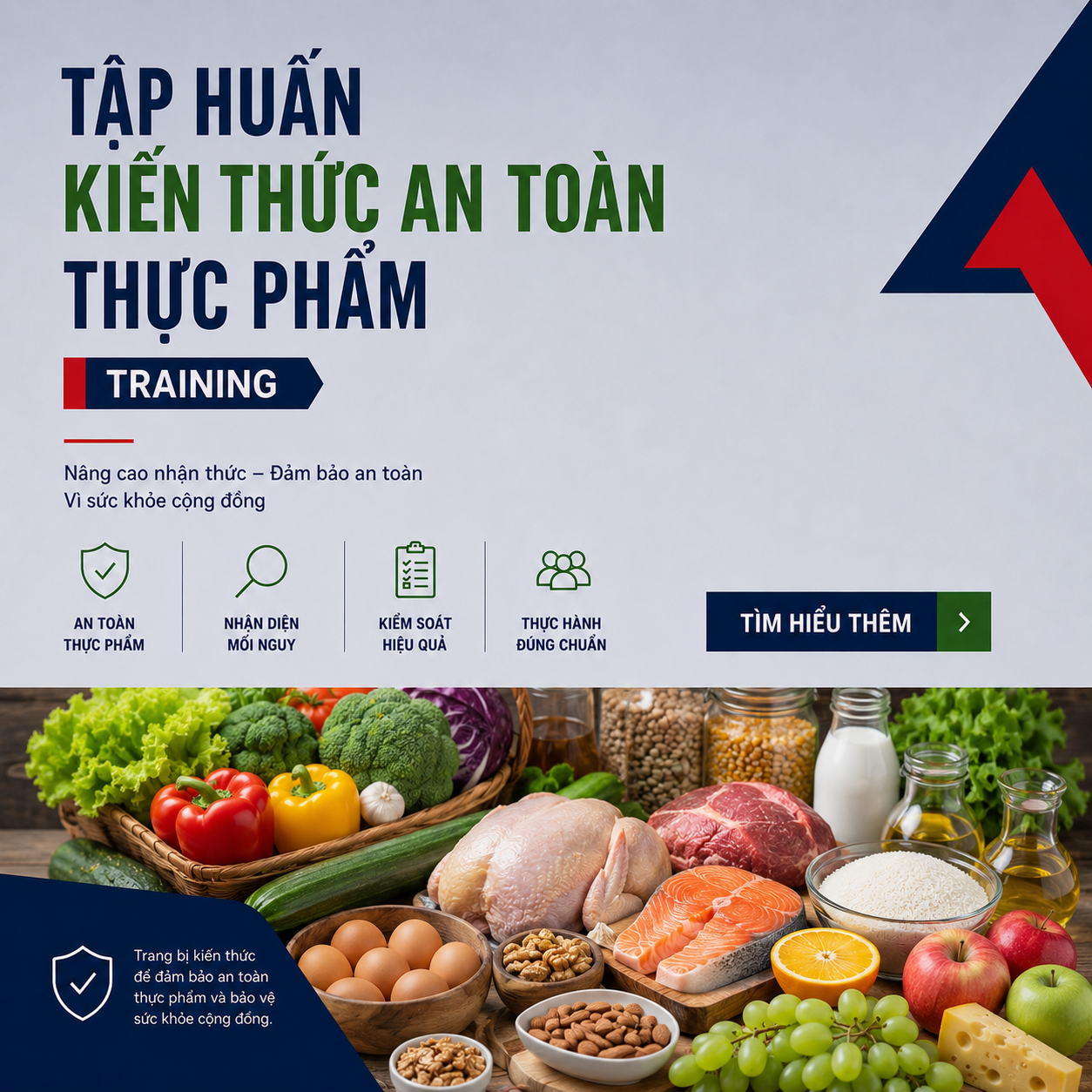
Is your organization facing these challenges?
Many food production, processing, and trading organizations still struggle to meet regulatory food safety requirements.
✓ Personnel have not undergone food safety knowledge training.
✓ Lack of understanding of legal responsibilities related to food production and business operations.
✓ Persistent risk of violating food safety regulations.
✓ Incomplete identification of hazards affecting product quality.
✓ Difficulties in preparing applications for the Certificate of Food Safety Compliance.
✓ Lack of knowledge in hygiene control during production and business operations.
KMRA's training course is specifically designed to help businesses and workers improve awareness, comply with legal regulations, and build a safe food production environment.
What value does the course bring to your organization?
Understanding Legal Responsibilities
Equip your team with critical food safety knowledge, legal regulations, and related compliance responsibilities.
Controlling Food Safety Hazards
Identify and prevent biological, chemical, and physical hazards during food production, processing, and commercial operations.
Controlling Food Safety Hazards
Enhance the capability to identify, analyze, and control biological, chemical, and physical hazards.
Meeting Regulatory Requirements
Support businesses in fulfilling mandatory compliance conditions enforced by state regulatory authorities.
Elevating Reputation and Product Quality
Enhance customer trust and minimize food safety risks.
Who should attend?
This training course is suitable for:
- Food production and processing facility owners
- Foodservice business owners
- Food handlers / Food production and processing staff
- Kitchen and service staff at restaurants, food outlets, and institutional cafeterias
- Quality management and QA/QC officers
- Individuals seeking to enhance their knowledge of food safety
Training program content
|
DATE |
COURSE CONTENT |
|
DAY 1 From 08:30 AM to 04:30 PM |
PART 1: FOOD CONTAMINATION HAZARDS I. Key Concepts
II. Classification of Food Contamination Hazards
PART 2: FOOD SAFETY CONDITIONS FOR FOOD PRODUCTION AND PROCESSING FACILITIES PART 3: FOOD SAFETY CONTROL METHODS FOR FOOD PRODUCTION AND PROCESSING FACILITIES
|
|
PART 4: GOOD FOOD HYGIENE AND SAFETY PRACTICES
PART 5: LEGAL REGULATIONS RELATED TO FOOD PRODUCTION AND PROCESSING FACILITIES PART 6: OVERVIEW OF HAZARD ANALYSIS AND CRITICAL CONTROL POINT (HACCP) SYSTEM
*Testing & Certificate Issuance |
Course Information
|
Course Outline |
Details |
|
Duration |
01 day |
|
Training Format |
On-site or Online |
|
Training Location |
At the Client's Site or Online (as requested by the client) |
|
Language |
Vietnamese |
|
Certificate |
Certificate of Completion |
|
Documentation |
Comprehensive Training Documentation |
Why Organizations Choose KMRA
Practical experience from certification audits
KMRA's team of experts possesses extensive experience in consulting, training, and auditing within the food safety sector.
Practical Content Tailored to Business Reality
The curriculum is updated to reflect current food safety regulationsThe curriculum is updated to reflect current food safety regulations.
Flexible Training Delivery
- On-site Training (at your organization)
- Online Training
- Public Training Courses
Dedicated Post-Training Support
Providing support to resolve issues arising during implementation and practical application.
What is Food Safety Knowledge Training?
Food safety knowledge training is an educational program designed to equip individuals and organizations with essential knowledge of food hygiene and safety, food hazards, and relevant legal regulations. This is a critical requirement for individuals and entities involved in food production, processing, and trading.
Why is Food Safety Knowledge Training Necessary?
Food safety knowledge training helps businesses and workers:
- Comply with current legal regulations
- Reduce the risk of food insecurity
- Improve product quality
- Protect consumer health
- Enhance corporate brand reputation
- Minimize legal risks and customer complaints
Benefits of Food Safety Knowledge Training Courses
- Raising Food Safety Awareness
- Legal Compliance
- Effective Control of Food Hazards
- Improving Product and Service Quality
- Building Corporate Image and Reputation
- Minimizing Risks and Losses
- Creating a Foundation for Implementing Food Management Systems
- Enhancing Workers' Sense of Responsibility
Key Figures
More than 1,000 organizations have trusted KMRA's expert team for training, certification, and management system auditing services.
Frequently Asked Questions (FAQs)
1. How long does the training course last?
The training course is typically conducted over one day.
2. Is participation in the training course required by law?
For many individuals directly involved in the production, processing, and trading of food, having adequate food safety knowledge and training is an important requirement to comply with current applicable regulations.
3. Will participants receive a certificate upon completion of the course?
Yes. KMRA issues a certificate of course completion to participants who meet the course requirements.
4. Are any prior professional qualifications or knowledge required to attend the course?
No. The program is designed to cover topics from basic to advanced levels, making it suitable for both beginners and individuals with prior experience in the food industry.
5. Can businesses organize training at their production facilities?
Yes. KMRA provides on-site training at factories, production facilities, or other locations requested by businesses nationwide.
6. Is online training effective?
Yes. The content and training outcomes are equivalent to those of in-person training.
7. Should small businesses or household businesses participate in the training course?
Yes. Regardless of the size of the business, food safety knowledge and training are essential to ensure product quality, protect consumer health, and minimize legal risks.
8. Does KMRA provide additional consulting support after the training?
Yes. The KMRA team of experts is always available to answer questions related to food safety and provide appropriate consulting solutions to businesses after the course.
9. Does the course include updates on the latest food safety regulations?
Yes. The training content is regularly updated in accordance with current applicable laws and regulations, helping businesses meet the requirements of relevant regulatory authorities.
Register for Food Safety Knowledge Training
KMRA provides food safety knowledge training services tailored to the needs of businesses nationwide.
We support businesses in developing training programs that are appropriate to their scale, type of operation, and specific requirements.
✓ Request a detailed training outline
✓ Request a training quotation
✓ Get consultation on the most suitable training program
✓ On-site training available nationwide